
2026-10-29 · Bobby Pruitt
Maintaining Gas Lines In Humid Southern Climates
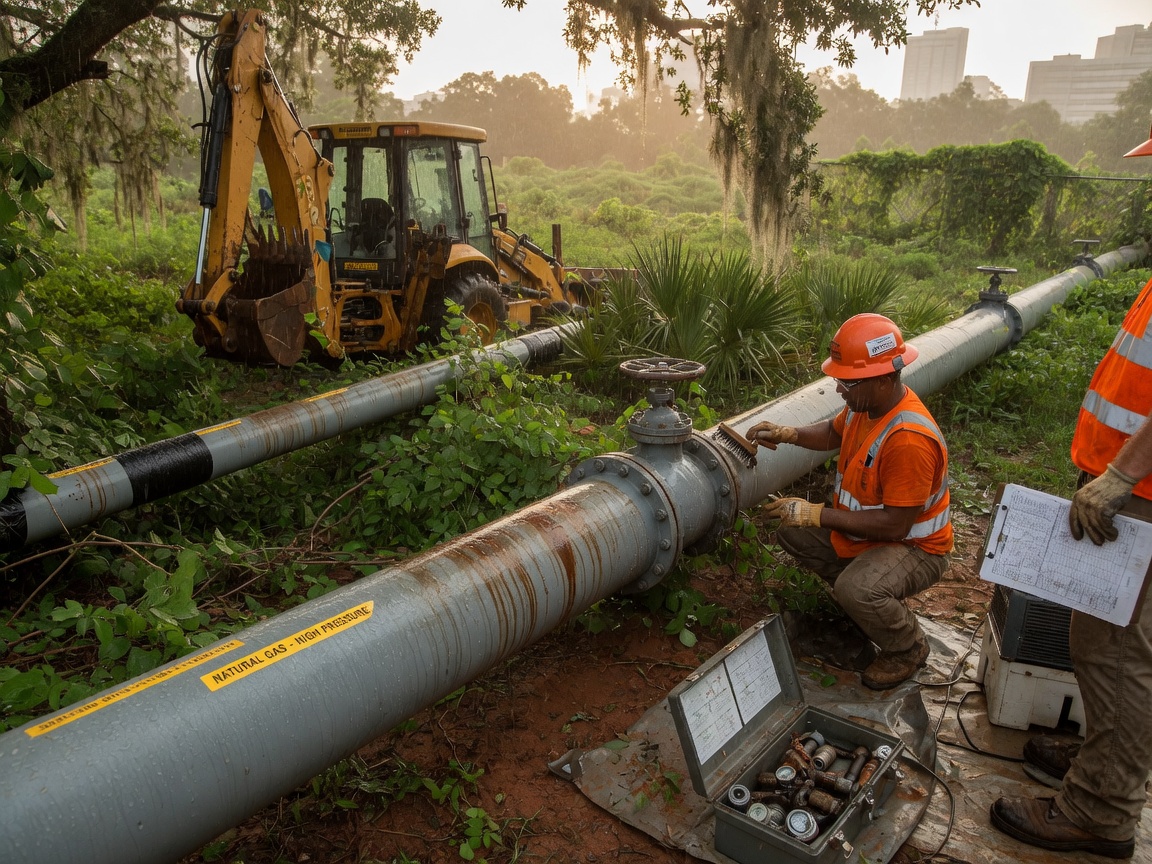
Birmingham's humid subtropical climate with hot summers and mild winters speeds up external corrosion on steel gas lines, particularly where soil stays damp year-round. Homeowners in Jefferson County should schedule visual inspections of exposed piping twice a year and watch for soil settling around underground runs after heavy rain. These steps catch early pitting before leaks develop in neighborhoods with older housing stock.
Corrosion from Constant Moisture in Jefferson County Soil
High humidity keeps soil moisture elevated even during mild winters, allowing water to stay in contact with metal pipe for longer periods than in drier regions. In areas such as Five Points South, Highland Park, and Forest Park, many homes built before 1970 still have original steel lines that show accelerated rust at joints and fittings. Homeowners can reduce risk by clearing vegetation that traps moisture against the house foundation and by noting any musty odors near meter sets. When lines run under driveways or sidewalks, the added weight and limited air flow increase corrosion rates. Checking for flaking metal or discolored soil during routine yard work provides an early warning. Professional assessment becomes necessary once surface rust appears on more than a small section of pipe.
Seasonal Patterns and Terrain Challenges Around Birmingham
Hot summers drive ground temperatures high enough to expand metal and stress older welds, while mild winters rarely freeze the soil deep enough to protect lines from ongoing moisture. Rolling terrain in Crestwood and East Lake creates low spots where water collects, raising the chance of external corrosion on underground segments. In North Birmingham and Titusville, clay-heavy soils hold water longer after storms, slowing natural drying around pipes. Residents in Pratt City and Woodlawn often see service lines running near older sewer laterals, where shifting ground from repeated wet-dry cycles can create small leaks. Monitoring gas meter dials for unexplained drops during humid months helps identify issues before they become noticeable indoors. Linking these observations to local weather patterns lets homeowners time inspections after the wettest periods rather than on a fixed calendar.
Practical Steps for Homeowners in Southside and Nearby Cities
Start by locating the main shutoff and meter, then inspect visible piping for rust or loose fittings every three months. Keep records of any odors or hissing sounds, noting the date and weather conditions at the time. In Homewood and Mountain Brook, where many homes sit on sloped lots, pay extra attention to lines that cross drainage swales. After heavy rainfall, compare meter readings before and after turning off all appliances to spot slow leaks. When older lines serve gas fireplaces or stoves, schedule a pressure test rather than relying on visual checks alone. These habits fit the realities of Birmingham's climate without requiring specialized equipment.
For deeper evaluation of buried lines, see Handling Gas Line Issues After Heavy Rainfall. Homeowners in Hoover often benefit from the same moisture-focused approach used in central Birmingham neighborhoods.