
2026-10-29 · Bobby Pruitt
How Storm Damage Affects Underground Gas Pipes
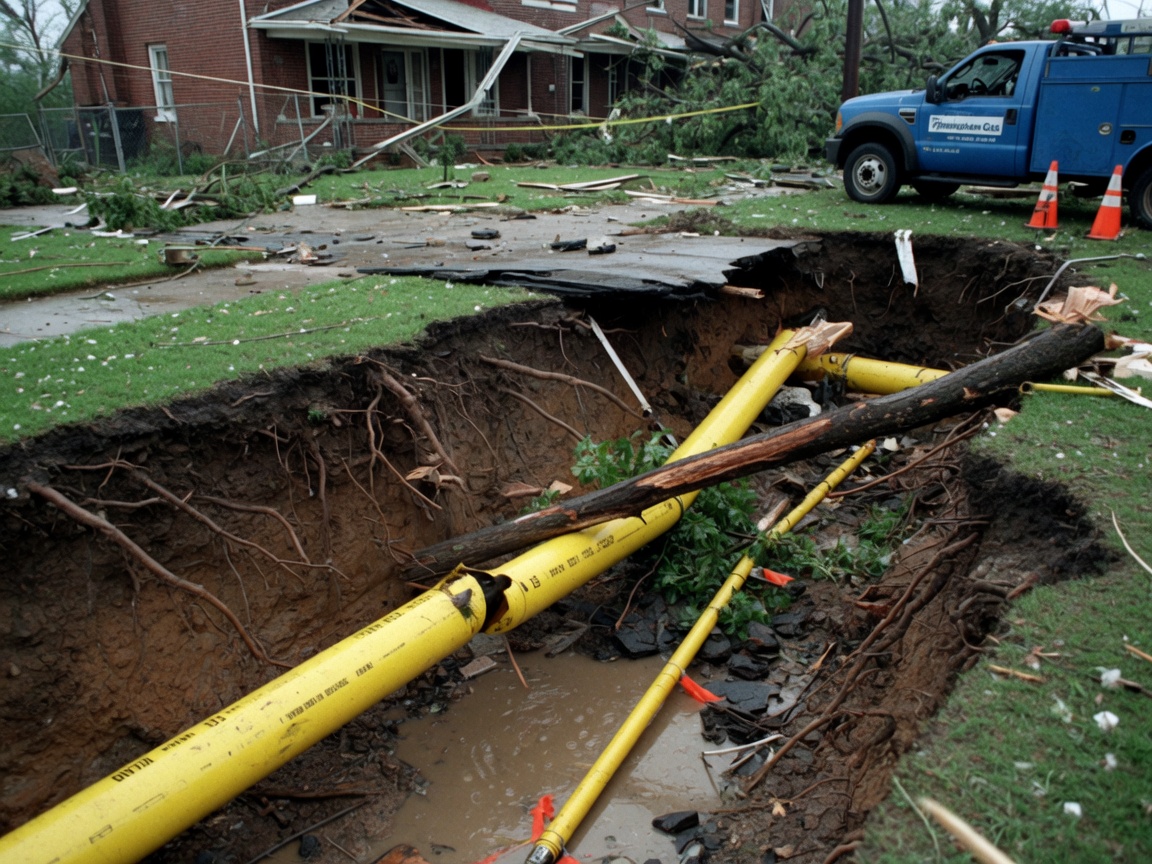
Heavy rainfall during Birmingham storms erodes the soil covering underground gas pipes, often exposing sections within a single intense event and raising the chance of corrosion or leaks in older Jefferson County neighborhoods. The humid subtropical climate brings frequent downpours that saturate clay-heavy soils common in Southside, Five Points South, and Avondale, allowing water to wash away protective cover and leave pipes vulnerable to shifting ground or debris impact. Mild winters limit freeze-thaw cycles but do little to offset the repeated saturation from summer thunderstorms that hit areas like Highland Park and Forest Park hardest.
Soil Erosion Patterns in Jefferson County Neighborhoods
Birmingham's terrain and older housing stock amplify erosion around underground gas pipes during storms. Homes built before 1970 in Crestwood, Ensley, and North Birmingham often sit on compacted fill or clay that sheds water quickly once saturated, carving channels that strip away the 18 to 24 inches of cover typically required over gas lines. In Titusville and Pratt City, steeper slopes accelerate runoff toward low-lying yards, leaving pipes closer to the surface after just two or three heavy rain events in a season. Residents in Woodlawn and East Lake report similar exposure after remnants of Gulf hurricanes push six to eight inches of rain in 24 hours, conditions that also affect nearby Hoover, Homewood, and Mountain Brook where newer subdivisions still contend with the same soil types.
Tree Root and Debris Damage After Severe Weather
Fallen trees and shifting roots from storm winds create direct threats to underground gas pipes in established Birmingham neighborhoods. Large oaks and pines common around Vulcan Park and Museum or near the Birmingham Zoo can heave soil when uprooted, bending or cracking lines installed decades ago in Highland Park and Forest Park. Debris carried by floodwaters in Railroad Park low areas or along Sloss Furnaces can scrape pipe coatings, accelerating corrosion in the humid air that lingers after storms. These impacts differ from gradual settling because they occur suddenly and often affect multiple properties at once in Avondale or Five Points South.
Corrosion Acceleration in Humid Subtropical Conditions
Once storm erosion exposes underground gas pipes, the region's hot summers and frequent humidity speed corrosion on steel and older coated lines. Water pooled in yards across Southside and Titusville keeps soil moisture high for weeks, promoting rust that can thin pipe walls measurably within 8 to 12 months. In East Lake and Woodlawn, where water tables sit closer to the surface, repeated flooding introduces minerals that attack any exposed metal faster than in drier regions. This process turns minor exposure into leaks that require prompt attention rather than waiting for routine checks.
Practical Steps After Storm Exposure
Homeowners noticing sinkholes, unusual vegetation die-off, or a sulfur smell after storms should contact a local service for assessment rather than attempting excavation themselves. Checking around foundations in Pratt City or North Birmingham yards after heavy rain helps catch early exposure before corrosion advances. When lines need attention, options such as gas line repair or underground gas line installation address the specific damage while meeting current depth requirements. Seasonal maintenance routines outlined in seasonal maintenance for natural gas appliances also help track pipe condition year-round in Jefferson County homes.