
2026-10-29 · Bobby Pruitt
Gas Line Safety During Home Renovations
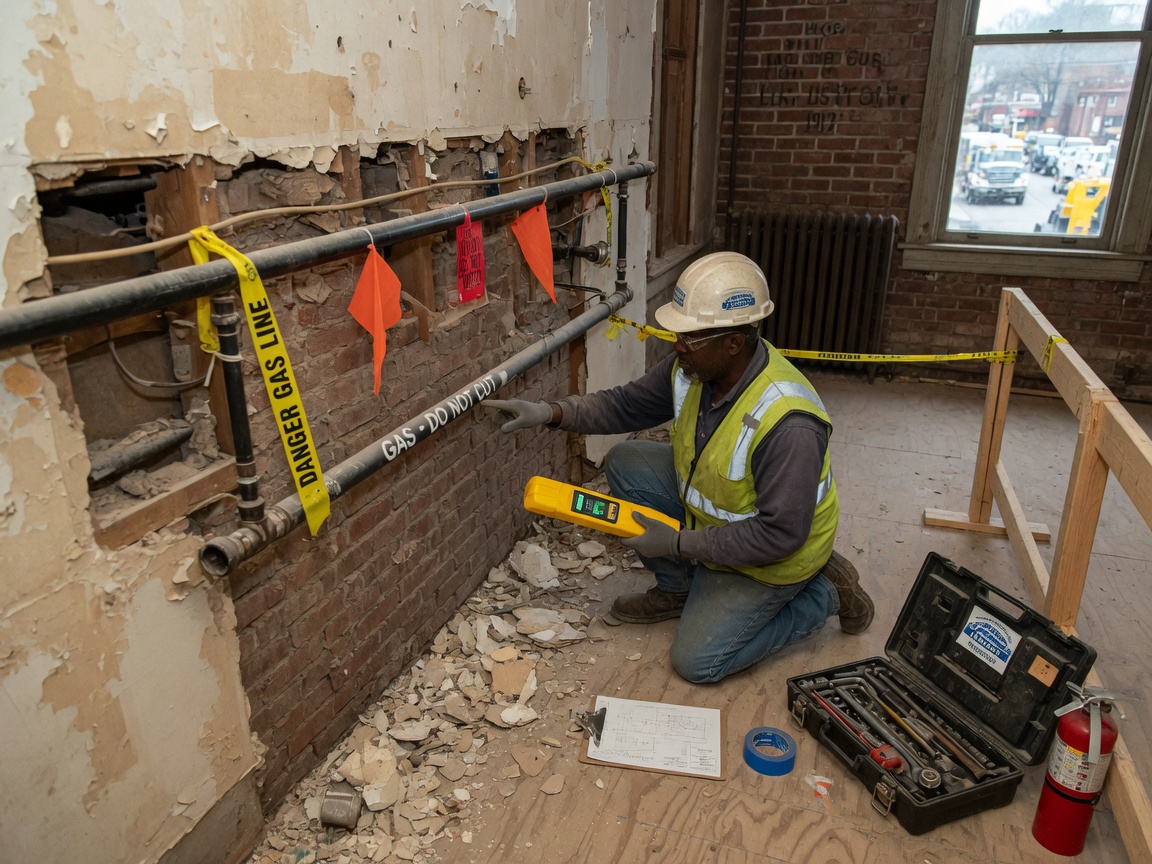
During home renovations in Birmingham, gas line safety starts with locating and marking all lines before any excavation or wall demolition begins in areas like Southside or Five Points South.
Assessing Existing Lines Before Work Starts
Older homes in Ensley, Pratt City, and Woodlawn often have steel lines installed decades ago that corrode faster in Jefferson County's humid subtropical climate. Renovation crews should request a professional leak detection sweep first, especially when adding rooms or updating kitchens near original piping routes. Soil shifts from heavy summer rains can expose shallow lines, raising rupture risks during foundation work. Homeowners in Crestwood and Forest Park report that lines running under driveways or patios require extra tracing because maps from utilities frequently miss reroutes made after 1970s expansions. Checking pressure at multiple points reveals hidden weaknesses before hammers swing.
Protecting Lines During Demolition and Excavation
In Highland Park and East Lake, where bungalows sit on clay-heavy soil, backhoes can shear lines that settled unevenly over time. Always expose lines by hand within three feet of known routes and use non-sparking tools near valves. The mild winters here mean fewer freeze issues than up north, yet summer heat expands joints and makes them brittle when disturbed. Crews working near Railroad Park or around Oak Hill Memorial Cemetery note that tree roots from mature oaks commonly wrap around underground sections, so pruning roots carefully avoids nicking the pipe. Temporary shutoff at the meter prevents accidental gas release when walls come down in Titusville or Avondale renovations.
Handling Renovation Changes to Gas Systems
Adding a new stove or relocating a water heater in Mountain Brook or Homewood requires running fresh lines that meet current burial depths to avoid future settlement problems. Bold key junctions with tracer wire so future owners can locate them without guesswork. In North Birmingham and Pratt City, where many homes still use original low-pressure systems, any pressure change from new appliances demands a full system test afterward. Linking to detailed repair guidance helps when unexpected corrosion appears mid-project. Storm-related ground movement documented in local articles shows how heavy rains can shift fill dirt around freshly installed sections, so backfill compaction matters.
Post-Renovation Testing and Monitoring
After walls close and landscaping finishes in areas like Forest Park or Crestwood, schedule a full pressure test and soap solution check at every joint. Residents near the Birmingham Zoo or Sloss Furnaces often notice faint odors first because older homes lack modern venting. Keep the meter accessible during the final walkthrough so technicians can isolate sections quickly. Regular monitoring every six months catches small issues before they affect the entire household, particularly after major additions that altered load on the original supply.