
2026-08-21 · Robert Hale
Seasonal Gas Line Issues After Summer Storms
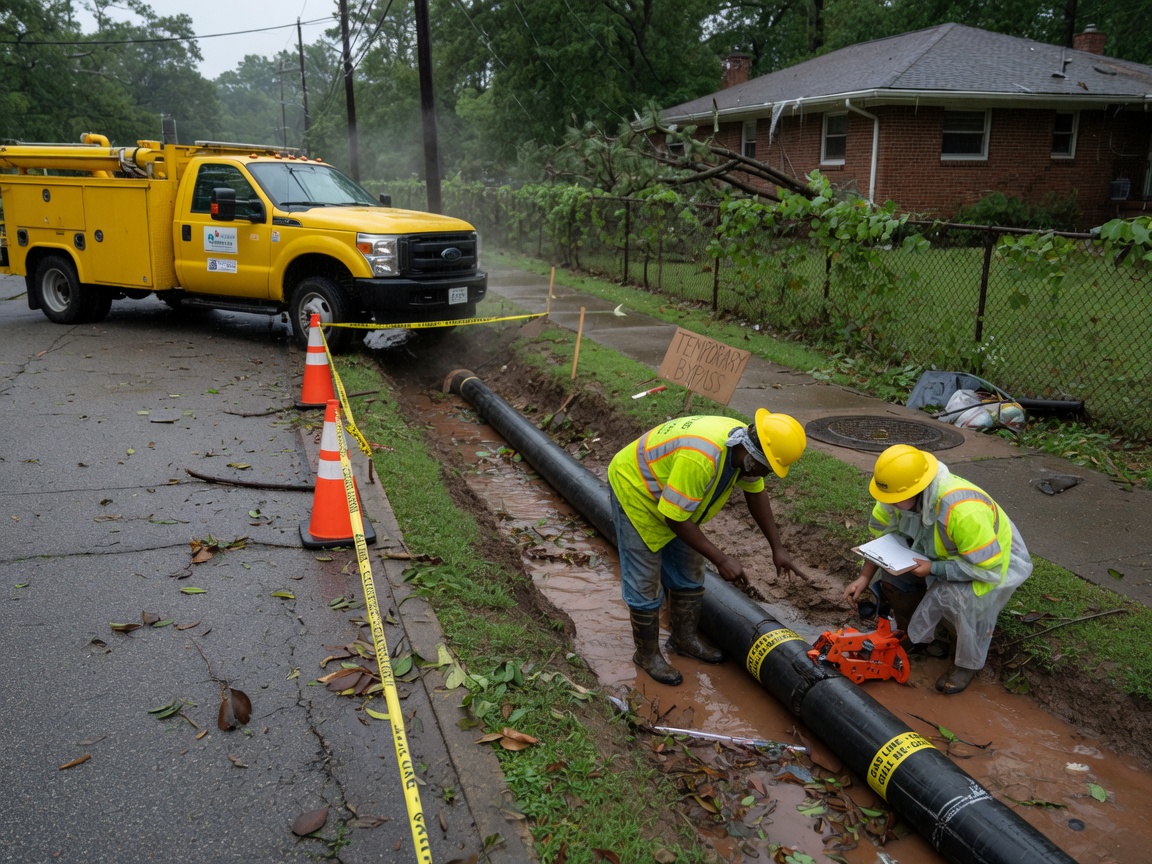
After summer storms in Birmingham, gas line issues from soil erosion and water infiltration typically appear within 2–4 weeks, especially along older lines in neighborhoods like Ensley, Pratt City, and Titusville where housing stock dates back decades and clay-heavy soils shift under repeated downpours.
Soil Shifts After Heavy Rain in Jefferson County
Birmingham’s hot summers fuel thunderstorms that drop several inches of rain in hours, saturating the ground across Southside and Five Points South. This saturation loosens soil around buried lines, allowing movement that stresses joints and creates leaks. In Crestwood and Forest Park, where many homes sit on sloped lots, runoff accelerates erosion and exposes pipes that were previously covered by 18–24 inches of earth. Operators here routinely find lines pushed out of alignment after a single wet July or August weekend because the region’s mild winters never fully dry the subsoil before the next storm cycle begins.
Debris and Surface Impacts Near Landmarks
Fallen branches and flooding debris collect around meter sets and above-ground risers in Highland Park and Avondale, where mature trees line streets near Vulcan Park and Museum and Railroad Park. When winds push limbs against regulators or pull on service lines, small cracks form that worsen once temperatures swing between daytime highs near 90 degrees and cooler nights. Crews working near Sloss Furnaces and the Birmingham Civil Rights Institute often trace leaks back to these surface hits rather than underground corrosion, because the area’s dense urban tree canopy turns every storm into a potential contact event.
Flooding Patterns in Low-Lying Birmingham Areas
Neighborhoods such as Woodlawn, East Lake, and North Birmingham sit lower than surrounding ridges, so storm water pools and infiltrates trenches. Older cast-iron or steel lines installed before modern coatings suffer accelerated corrosion when water sits against the pipe for days. Homewood and Mountain Brook residents on the edges of these zones sometimes notice pressure drops or hissing sounds only after the water recedes, because the saturated clay prevents quick detection. Checking for Gas Leak Detection becomes essential once standing water appears near any service entrance.
Practical Next Steps After Storms
Walk the perimeter after the rain stops and note any new depressions or exposed piping in yards. If gas odor appears or appliances fail to light consistently, shut off the supply at the meter and call for assessment. Local regulations in Jefferson County require permits for any excavation deeper than 12 inches, so homeowners should review Local Regulations For Gas Line Work In Jefferson County before digging. When lines need replacement, Gas Line Repair crews often reroute around eroded trenches rather than replace in the same unstable soil. The business at 569 Brookwood Village, Birmingham, AL 35209 operates Mon–Fri 8am–6pm and Sat 9am–2pm to handle these seasonal calls across Hoover and nearby communities.