
2026-08-21 · Robert Hale
Preventing Corrosion In Underground Gas Lines
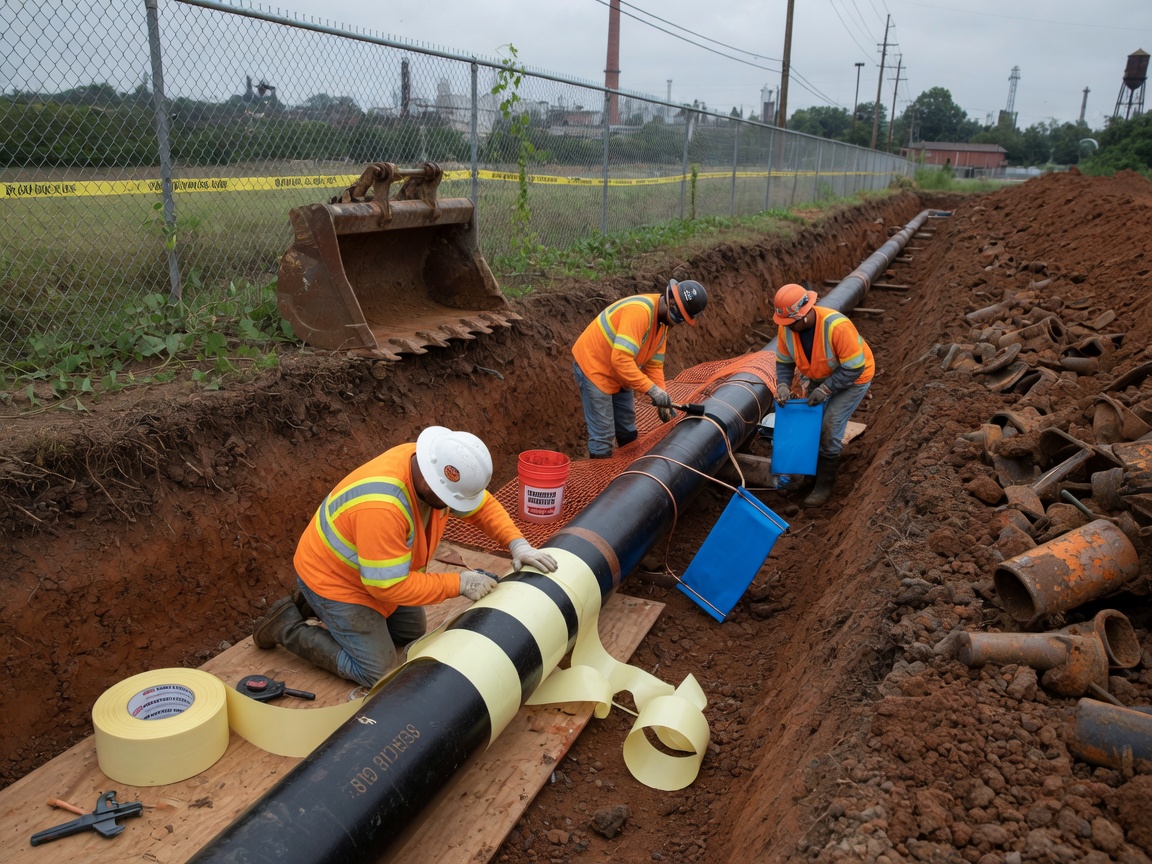
In Jefferson County, preventing corrosion on underground gas lines starts with installing coated steel pipe paired with cathodic protection, which can add 20–30 years to system life when properly maintained in the area's clay and loamy soils.
Understanding Soil and Terrain Challenges in Jefferson County
Jefferson County's red clay and variable drainage create electrolytic conditions that speed up metal loss on buried steel. Neighborhoods such as Southside, Five Points South, and Ensley often sit on older fill material mixed with construction debris, raising stray-current risks near former industrial sites. Crews must test soil resistivity before any new run and apply dielectric coatings plus sacrificial anodes sized for the measured corrosion rate. In Pratt City and Titusville, shallow bedrock forces shallower trenches that stay wet longer, requiring extra tape wraps and careful backfill compaction to avoid coating holidays. These steps differ from the sandy soils found farther south and directly affect how long a line lasts before leaks appear.
Impact of Birmingham's Humid Subtropical Climate
Hot summers and mild winters keep soil moisture high for most of the year, preventing the drying cycles that slow corrosion elsewhere. Condensation inside poorly vented meter boxes in Highland Park and Forest Park adds another moisture source at the transition from below-grade to above-grade pipe. During heavy spring rains, water tables rise quickly in East Lake and Woodlawn, submerging lines for weeks and increasing the need for impressed-current systems on longer commercial runs. Operators track these seasonal patterns because a line installed in Crestwood without upgraded coating will show pitting years sooner than the same installation in drier parts of the state.
Recommended Materials and Protective Measures
Modern installations use mill-applied fusion-bonded epoxy plus field-applied shrink sleeves at every joint. For retrofits in Avondale or North Birmingham, technicians often add linear anodes along the trench to protect existing uncoated sections. Polyethylene tape wraps rated for 80 mil thickness provide a secondary barrier when rocky backfill is unavoidable. Underground Gas Line Installation crews document every anode connection and coating test so future owners know exactly what protection is in place. These methods replace older bare-steel practices still found in many pre-1970 homes across the county.
Regular Inspection Practices for Neighborhoods like Southside and Avondale
Annual close-interval surveys using copper-copper sulfate reference electrodes locate coating faults before leaks develop. In older Southside blocks, technicians also perform gas leak detection along service lines that cross under sidewalks and driveways. Homeowners in Mountain Brook and Homewood can schedule checks every three years once the line reaches 15 years of age. Gas Line Repair teams carry portable rectifiers to verify cathodic protection levels on the spot. Keeping records of these readings helps predict when a section needs rehabilitation rather than full replacement.
When to Consider Professional Assessment or Replacement
Signs such as fluctuating pressure at appliances or sulfur odors near foundations warrant immediate evaluation. Properties in Ensley and Woodlawn built before 1960 frequently contain uncoated lines that have reached the end of reliable service. Gas Line Safety Tips For Older Homes In Southside Birmingham outlines visual checks owners can perform between professional visits. When corrosion has advanced, Comparing Natural Gas And Propane Options For Birmingham Properties discusses material upgrades during re-piping. Lines at the Birmingham address 569 Brookwood Village are available for assessment Monday through Friday 8am–6pm and Saturday 9am–2pm.